Thai food calories: pad thai, khao man gai, kaprao and more
Thai food can be one of the healthiest cuisines in the world, or one of the easiest ways to eat 900 calories without noticing. The same dish can vary a lot from one stall to the next, so it helps to understand where the calories come from, not just a single number.
Where the calories hide
Most of the energy in a Thai plate comes from four things:
- Rice and noodles. Cooked white rice has about 130 kcal per 100 g. A standard plate holds roughly 200 to 250 g, so 260 to 330 kcal before anything else.
- Oil. One tablespoon of oil is about 120 kcal. Stir-fries and fried rice often use two or more.
- Sugar. Many sauces are sweet. Each tablespoon of sugar adds about 50 kcal.
- Fried extras. A fried egg (khai dao) adds about 90 kcal, and crispy pork or fried chicken adds a lot more than grilled or boiled meat.
Typical calorie ranges for popular dishes
The numbers below are estimates for a typical street-food or restaurant plate. Real portions vary, so treat them as a guide rather than exact values.
- Pad kaprao gai (holy basil chicken) with rice: about 550 to 650 kcal, plus about 90 with a fried egg. With crispy pork (moo krob) it's closer to 650 to 750 kcal.
- Khao man gai (chicken rice): about 550 to 600 kcal with boiled chicken, around 700 kcal with fried chicken. The rice is cooked in chicken fat, which is why it's higher than it looks.
- Pad thai: usually 500 to 700 kcal, depending on oil, sugar and peanuts.
- Khao pad (fried rice) with pork and egg: about 600 to 700 kcal.
- Khao kha moo (braised pork leg on rice): about 600 to 700 kcal, mostly from the fatty pork.
- Som tam (green papaya salad): only about 50 to 150 kcal for the salad itself. The sticky rice and fried chicken that come with it are what add up.
- Clear noodle soup (kuay teow nam sai): often 300 to 450 kcal for a normal bowl, less with extra vegetables and lean meat.
- Tom yum: the soup is light; the calories depend on whether it's the clear version or the creamy version with coconut milk or evaporated milk.
- Green curry with rice: around 600 to 750 kcal, because coconut milk is rich in fat.
- Mango sticky rice: a dessert portion is often 400 kcal or more, from coconut cream, sugar and sticky rice.
Lighter ways to order
You don't have to give up Thai food. Small changes make a big difference:
- Ask for less oil and less sugar. "Nam man noi, mai wan" is understood at almost every stall.
- Pick grilled, boiled or steamed over fried: gai yang (grilled chicken) or boiled chicken rice instead of fried.
- Watch the rice. Ask for half rice (khao noi), or swap part of it for extra vegetables.
- Skip the fried egg if you're cutting, or keep it and count it.
- Choose clear soups over coconut-milk curries.
- Add protein, not sauce. Extra chicken or an extra boiled egg fills you up for fewer calories than a sweet sauce.
The real problem: you never know the numbers
Even if you order carefully, every vendor cooks differently, so you can't really count what you eat. That's fine for a weekend, but hard if you're trying to lose fat or hit a protein target every day.
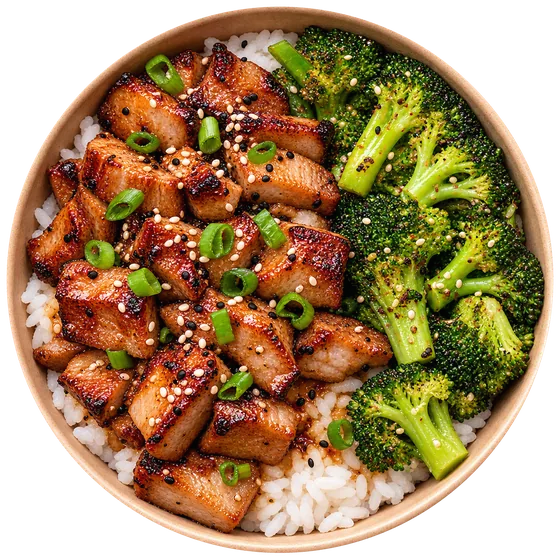
That's why every Athleat box shows its calories, protein, carbs and fat. Our chicken + rice box, for example, has about 550 kcal and 45 g of protein. Eat Thai food when you go out, and keep your weekday meals predictable. Check the menu, or use the macro calculator to see how many calories you need.
Calorie values are estimates for typical portions and vary by vendor. This article is general information, not medical advice.