Is rice bad for weight loss? What actually matters
In Thailand, rice is part of almost every meal, so it's one of the first things people blame when they want to lose weight. The short answer: rice doesn't make you gain weight; eating more calories than you burn does. But the amount of rice on your plate matters a lot.
How many calories are in rice?
- Cooked white rice: about 130 kcal per 100 g.
- Cooked brown rice: about 110 to 125 kcal per 100 g, depending on how it's cooked.
- Sticky rice: dense and very easy to eat a lot of, so portions are often bigger than they look.
A typical restaurant plate has 200 to 250 g of cooked rice, so 260 to 330 kcal. A bag of sticky rice with som tam can be even more. That's a big share of a single meal, especially when the rest of the dish is also oily or sweet.
Why rice gets the blame
Rice itself is low in fat and easy to digest, which is why athletes love it. The problem is usually how much and what comes with it:
- Large portions, often refilled at buffets or family meals.
- Fried rice and chicken rice (khao man gai), where the rice is cooked in oil or chicken fat and can add 100 to 200 kcal.
- Not enough protein or vegetables, so the rice fills the plate and you're hungry again soon after.
White or brown?
Brown rice keeps the outer layer of the grain, so it has more fibre, vitamins and minerals, and it's a little more filling. A large analysis published in the BMJ in 2012 linked high white rice intake with a higher risk of type 2 diabetes, especially in Asian populations who eat a lot of it.
For weight loss, though, the difference between white and brown is small compared with the difference between one and two cups. If you prefer white rice, keep it and focus on portion size.
How to keep rice and still lose fat
- Measure once. Weigh your usual portion a few times. Many people are surprised to find they eat 300 to 400 g.
- Fill half the plate with vegetables, a quarter with protein, a quarter with rice.
- Put protein first: about 30 to 45 g per meal keeps you full, so you need less rice.
- Adjust to your training: more rice on training days, less on rest days.
- Choose plain rice over fried rice or rice cooked in fat, most of the time.
How much rice should you eat?
It depends on your calories and how much you train:
- Fat loss, light activity: around 100 to 150 g of cooked rice per meal.
- Regular gym training: around 150 to 200 g per meal.
- Heavy training or bulking: 200 to 300 g or more.
Use the macro calculator to find your daily carb target, then split it across your meals.
Rice the Athleat way
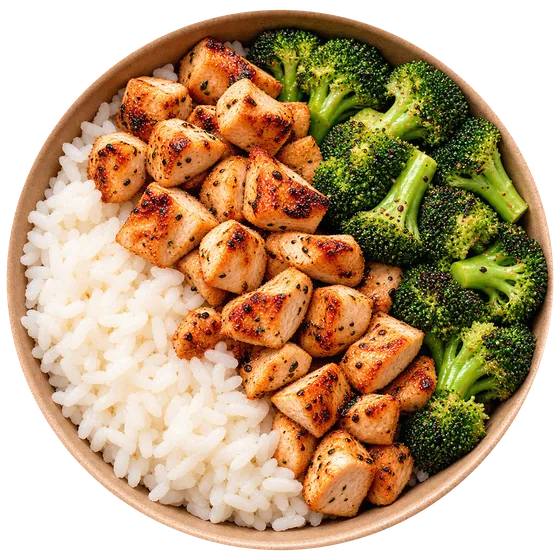
Our rice boxes use measured portions of rice with a big portion of lean protein, so you get the energy without guessing. The chicken + rice box, for example, has about 550 kcal, 45 g of protein and 60 g of carbs. See the menu for every dish's macros.
This article is general information, not medical advice. If you have diabetes or another health condition, talk to your doctor or a registered dietitian.