Training in Bangkok heat: how much water do you need?
Training in Bangkok is different from training in a cool gym in Europe. With temperatures above 30°C and high humidity most of the year, you sweat more, your heart rate climbs faster, and performance drops if you don't drink enough. Here's how to stay on top of it.
How much do you sweat?
Sweat rates vary a lot between people, but in hot conditions many people lose 0.5 to 2 litres per hour, and heavy sweaters even more. The American College of Sports Medicine recommends avoiding a loss of more than 2% of your body weight during exercise, because performance starts to suffer beyond that. For a 75 kg person, that's just 1.5 kg.
Find your own number in 2 minutes
- Weigh yourself before training, with minimal clothes.
- Train as usual and note how much you drink.
- Weigh yourself again after, towelled dry.
- Sweat loss = weight before − weight after + what you drank.
Example: 75.0 kg before, 74.0 kg after, 0.5 L drunk → 1.5 L lost in the session. Do this a few times to learn your pattern.
Before training
- Drink regularly through the day: your urine should be pale yellow.
- About 2 to 4 hours before, drink around 5 to 7 ml per kg of body weight (350 to 500 ml for a 70 kg person).
- A meal with some salt beforehand helps you hold on to that fluid.
During training
- For sessions under an hour, water is usually enough.
- For longer or very sweaty sessions (Muay Thai, outdoor running, long classes), drink regularly, roughly 400 to 800 ml per hour, adjusted to your sweat test.
- Don't force down much more than you sweat. Drinking far too much plain water can also be dangerous.
After training
- Replace about 1.5 litres for every kilogram you lost, over the next few hours. You need more than you lost because you keep losing fluid through urine.
- Include sodium: a salty meal, broth, or an electrolyte drink helps your body keep the water.
Do you need electrolytes?
Sweat contains mostly sodium, plus some potassium. You probably benefit from electrolytes if:
- you train more than about 60 to 90 minutes, or twice a day;
- you're a heavy or "salty" sweater (white marks on your clothes or cap);
- you get cramps or headaches after training.
Options: an oral rehydration salt sachet from a pharmacy, an electrolyte tablet, a sports drink, or simply a salty meal with plenty of water.
Signs of dehydration and heat illness
- Dark urine, thirst, headache, dizziness.
- Unusual fatigue, cramps, nausea.
Stop training and cool down if you feel dizzy, confused or stop sweating in the heat. That can be heat exhaustion or heat stroke, which is a medical emergency.
Food is part of hydration
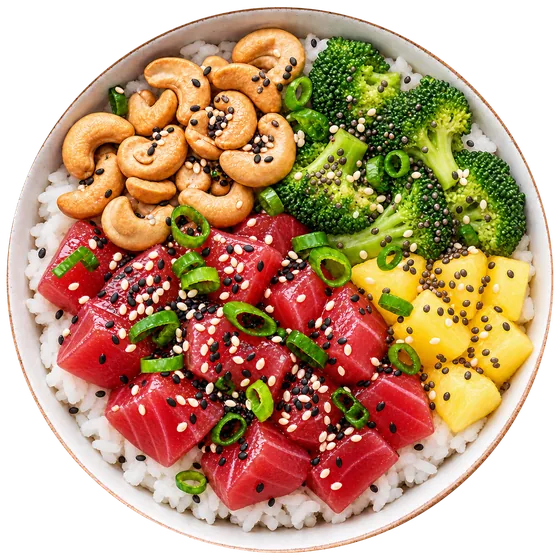
Meals with rice, vegetables, fruit and a normal amount of salt help you rehydrate after training. Athleat meals combine carbs, protein and vegetables, so your post-workout meal helps with recovery and hydration at the same time. More on recovery meals in what to eat before and after a workout, or browse the menu.
This article is general information, not medical advice. If you have a heart, kidney or blood pressure condition, ask your doctor before changing your fluid or salt intake.