Cutting vs bulking: how to adjust your meals
"Cutting" means eating a little less to lose fat. "Bulking" means eating a little more to build muscle. Both work best with the same foods. What changes is mostly the amount of carbs and fat, while protein stays high.
Step 1: find your maintenance calories
Maintenance is the amount you eat when your weight stays stable. The easiest way to find it: track what you eat for two weeks while weighing yourself every morning. If the weekly average stays the same, that's your maintenance.
Step 2: adjust for your goal
- Cutting: eat a moderate deficit of a few hundred calories a day below maintenance. Losing around 0.5 to 1% of body weight per week is a sensible pace that protects muscle.
- Bulking: eat a small surplus of a few hundred calories a day. Gaining slowly keeps most of the extra weight as muscle rather than fat.
Big deficits and big surpluses feel faster, but they're harder to keep up and usually lead to losing muscle (cutting) or gaining mostly fat (bulking).
Step 3: keep protein high either way
Aim for about 1.6 to 2.2 g of protein per kg of body weight a day. When cutting, stay at the top of that range: it helps you keep muscle and keeps you full.
What it looks like with Athleat meals
- Cutting: two lighter meals plus a protein-rich snack, for example a chicken + rice box (about 550 kcal, 45 g protein) and a tuna poké bowl (about 520 kcal, 35 g protein).
- Maintaining: three meals a day from the menu.
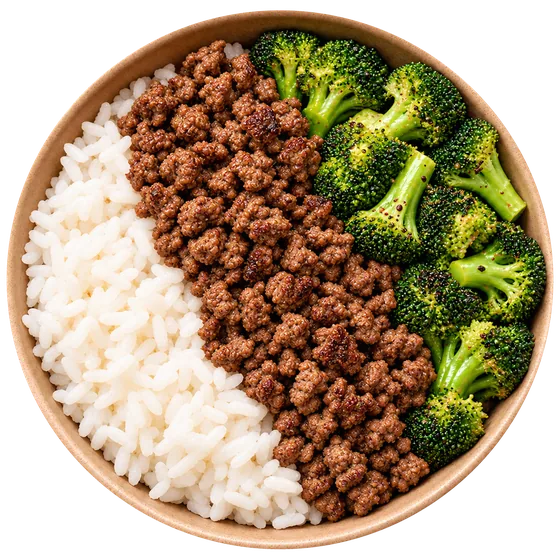
- Bulking: three to four meals a day, adding the higher-calorie options like the beef + rice box or the salmon poké bowl.
On a meal plan, you can ask us to adjust portions and macros for cutting or bulking.
The part that matters most
Consistency beats precision. A plan you can follow for 12 weeks will do more than a perfect plan you drop after 10 days. That's why having your meals ready helps so much.
This article is general information, not medical advice. If you have a health condition, talk to your doctor or a registered dietitian first.